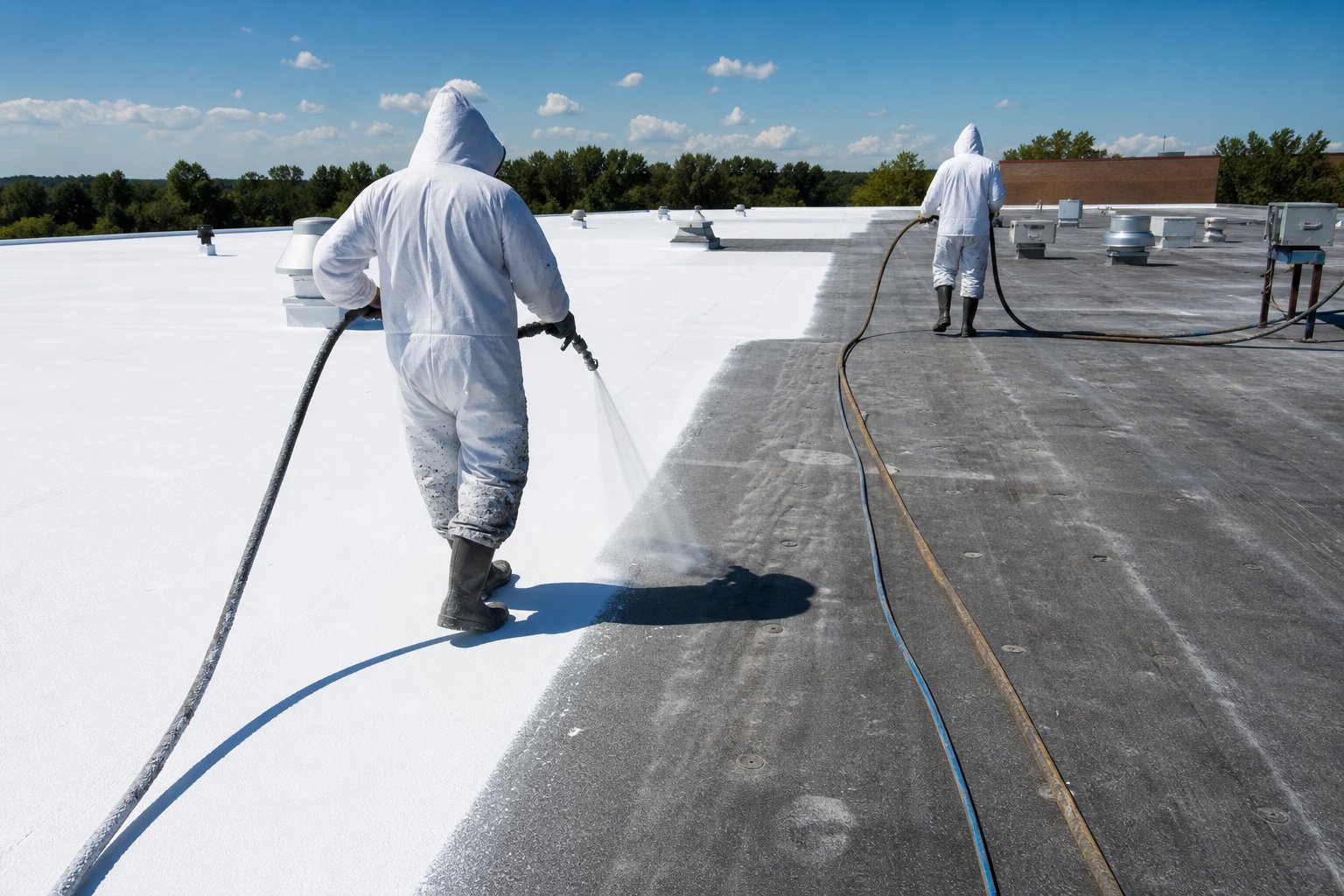
Flat roof coating is one of those projects that only works when conditions cooperate. The material needs dry surfaces, adequate temperatures, and enough time to cure before rain arrives. In Michigan, those conditions align most reliably in one season.
For most coating systems, summer is the only season where every variable lines up to produce an installation that performs the way it is designed to.
Here is why summer is the best time for flat roof coating in Michigan.
How is The Summer Temperature Perfect for Flat Roof Coating in Michigan?
Every roof coating product ( silicone, urethane, acrylic) comes with application requirements that are not flexible suggestions. They are the conditions under which the material bonds correctly and delivers the performance it is rated for.
Temperature is the most critical requirement.
Silicone roof coating MI applications need surface and ambient temperatures above 40 degrees Fahrenheit during application and through the initial cure period.
Acrylic coatings require temperatures above 50 degrees and cannot be applied if rain is expected within 24 hours. Urethane systems have similar restrictions.
Spring and Fall Temperature
Spring and fall create real problems for coating projects. Temperatures in April and October swing significantly between day and night. A day that starts at 55 degrees can drop to 35 by evening. A coating applied in those conditions may not cure correctly through the overnight temperature drop, affecting adhesion and long-term performance in ways that are not immediately visible but show up within the first winter season.
Summer eliminates most of those risks. Consistent daytime temperatures well above application minimums, warm overnight temperatures, and lower rain probability during Michigan's drier summer weeks create the most reliable coating environment of the year.
Surface Moisture Is the Biggest Enemy of Coating Adhesion
A coating applied over a damp membrane does not bond correctly. It may look fine immediately after application. Within a season, areas where surface moisture was present at the time of coating show adhesion failure, including:
Bubbling
Delamination
And loss of the waterproof seal the coating was applied to create.
Michigan roofs coming out of winter carry moisture in ways that are not always visible from the surface. Snow melt works into seams and membrane edges through freeze-thaw cycling. Condensation accumulates under the membrane during temperature swings between heated interior spaces and cold exterior surfaces. Insulation that tested dry in the fall can hold moisture by spring.
Summer gives roofs time to fully dry out after Michigan's wet spring season. By June and July, surface moisture levels on a flat roof membrane drop to the range coating manufacturers specify for proper adhesion. The roof has had weeks of consistent warmth and sun exposure to drive out the residual moisture that spring leaves behind.
This matters particularly for flat roof repair Michigan projects because the freeze-thaw season here is long and aggressive. A roof that went through 40 or 50 freeze-thaw cycles between November and March needs more drying time than a roof in a warmer climate. Summer provides that time before the coating goes down.
The Cure Window Before Winter
A flat roof coating needs time to fully cure before it faces its first freeze-thaw cycle. Full cure times vary by product and conditions, but typically run between 24 hours for the initial set and several weeks for complete through-cure of the full membrane thickness.
A coating applied in summer has months of stable conditions ahead of it before Michigan winter arrives. By the time November freeze-thaw cycles begin, a summer-applied coating has cured completely, bonded fully to the substrate, and established the flexibility and adhesion it needs to move with the roof membrane through cold temperature stress.
A coating applied in September or October does not have that runway. Michigan's first hard frosts can arrive before the coating has reached full cure. A coating that enters its first freeze-thaw cycle before it has cured completely is more vulnerable to early adhesion failure than one that has had a full summer to develop properly. For commercial roof coating projects where the investment is significant, that risk alone justifies moving the project into summer scheduling.
Summer Allows Proper Preparation Time
Roof restoration Michigan projects are only as good as the surface preparation that precedes them. Cleaning, seam repair, flashing work, and substrate assessment determine whether the coating performs at its rated lifespan or fails early at points that were not properly addressed before application.
Summer scheduling allows preparation and coating to happen in sequence without weather interrupting either phase. A roof can be cleaned, seams repaired, and problem areas addressed across multiple days without concern that overnight temperatures will compromise fresh sealant or that unexpected rain will interrupt surface preparation before the coating goes down. In Michigan's spring season, weather windows are unpredictable.
Identifying Winter Damage While It Is Still Repairable
Summer coating projects start with a full roof inspection, and that inspection reveals what Michigan's winter season did to the membrane, seams, and flashings. Catching that damage in summer, before another winter arrives, is the most cost-effective timing possible.
Seams that opened slightly under freeze-thaw stress are easy to reseal in summer conditions. Flashings that pulled back from parapet walls or HVAC curbs can be properly reattached before water infiltration causes damage to the insulation beneath the membrane. Blisters that developed from trapped moisture through winter can be addressed before they grow through another freeze-thaw season.
Waiting until fall to schedule a summer roof coating Michigan project means letting discovered damage sit through more UV exposure and rain before it gets addressed. Summer inspection and coating handles both the assessment and the protection in the same project sequence - which is how roof restoration Michigan work delivers its full value.
Budget and Scheduling Advantages
Roofing contractors in Michigan are busiest in late summer and fall as building owners rush to complete exterior work before winter. Scheduling a commercial roof coating project for June or July rather than September means better contractor availability, more flexible scheduling, and, in many cases, more competitive pricing during a period that does not carry peak-season demand.
Commercial building owners who schedule coating work in summer also avoid the disruption that fall projects create when building operations are ramping back up. A coating project completed in June is finished and fully cured before fall brings its own demands on building management attention and budget.
For properties where flat roof repair Michigan work is needed alongside coating - seam repairs, flashing replacement, drain corrections - completing everything in a single summer visit is more cost-effective than separating repairs and coating into two seasonal visits with mobilization costs attached to each.
The Bottom Line
Michigan's summer season gives flat roof coating projects everything they need. Adequate temperatures, dry conditions, ample curing time, and contractor availability make summer ideal for flat roof coating in Michigan.
Published by Flat Roof Waterproofing Solutions -- certified industrial roofers serving commercial properties across West Michigan. Based in Grand Haven, MI. Call (616) 947-7652 to schedule a free inspection.