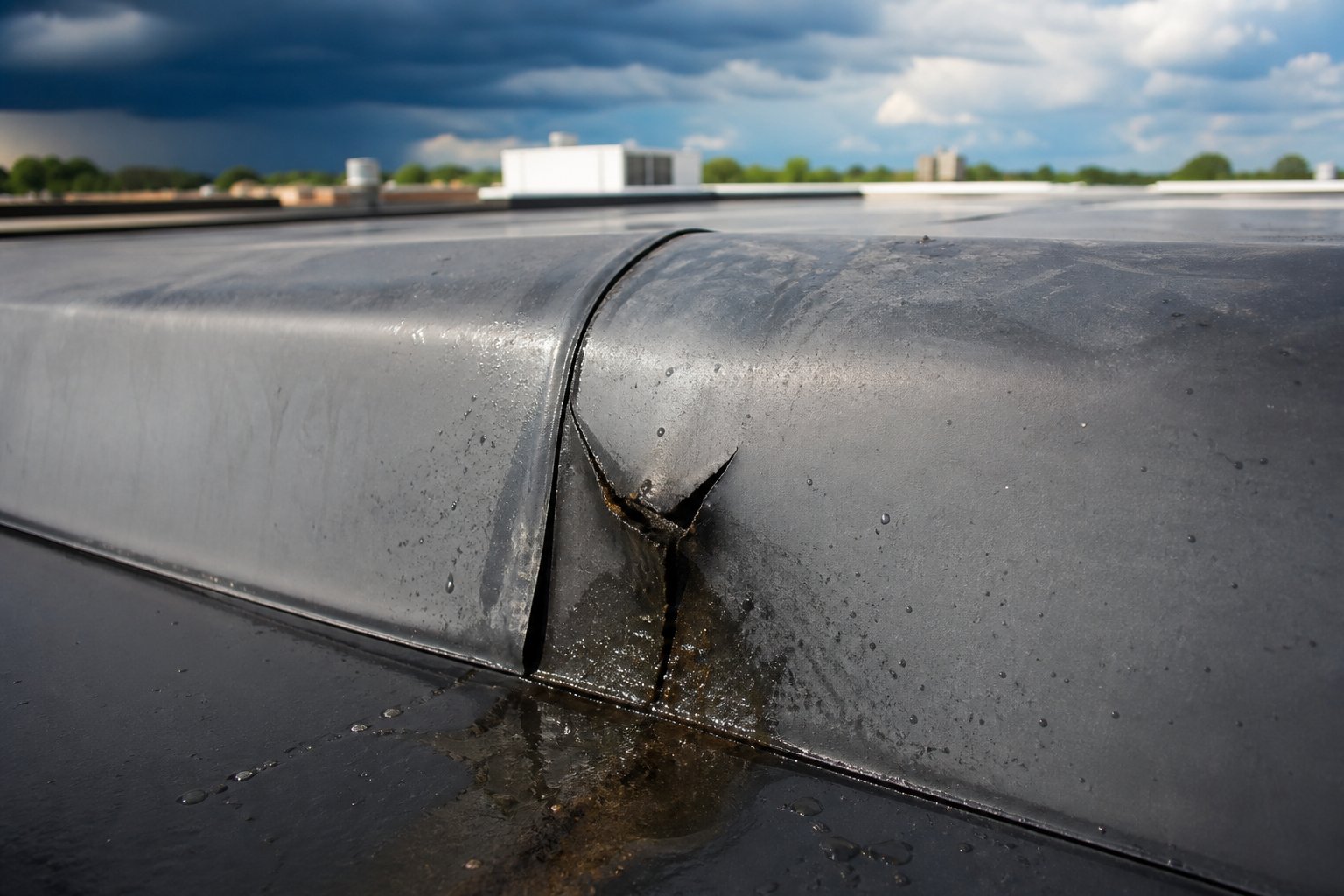
Michigan summers do not ease into storm season gradually. Heavy rain, strong winds off Lake Michigan, and fast-moving thunderstorms arrive with intensity. A small leak that was manageable through a dry spring becomes a serious problem.
The flat roofs most vulnerable to summer storm damage are not always the oldest ones. They are the ones with unaddressed problems. Those problems exist before the storm. The storm just reveals them at the worst possible time. Flat roof leak repair Michigan services address those issues. So that you can take necessary steps.
Why Michigan Summer Storms Hit Flat Roofs Hard?
A pitched roof sheds water immediately. A flat roof holds it. Even a well-drained flat roof sits with surface water longer than any sloped alternative. During a heavy Michigan rain event, that water finds every gap, every lifted seam, and every compromised flashing and pushes through under pressure that a light rain never creates.
Wind makes it worse. Michigan summer storms carry significant wind loads, particularly along the Lake Michigan corridor where storms move onshore fast. Wind uplift concentrates at perimeter edges, parapet walls, and anywhere the membrane has begun to separate from the substrate beneath it. A membrane edge barely holding before a windstorm is not holding after one.
Knowing what storms actually do to flat roofs changes what you look for before the season starts - and why flat roof maintenance MI completed before summer matters more than most building owners and property managers realize.
Start the Inspection Inside the Building Before Considering Flat Roof Leak Repair Michigan
The earliest and most reliable evidence of a flat roof leak is often found inside - not on the roof surface.
Walk the top floor ceiling directly below the roof and look carefully. Fresh water stains have darker, defined edges. Older stains that dried and reactivated look more uniform in color. Either one means water moved through the roof assembly at some point, and the source was never addressed.
Check light fixtures, ceiling vents, and HVAC registers that penetrate the ceiling. Water follows the path of least resistance and frequently appears at mechanical penetrations before it shows up anywhere else.
Walk the Roof Surface With Purpose and Spot Flat Roof Leaks
A general visual scan misses too much. Walk the roof with specific failure points in mind.
Membrane Condition
Look for blistering where the membrane has separated from the substrate below it. Blisters mean moisture is already trapped beneath the surface. They grow with every rain event and every temperature cycle. A small localized blister is a repair conversation. One that has been growing unchecked becomes a membrane replacement conversation.
Cracking or splitting across the membrane surface indicates material that has lost flexibility. Michigan's freeze-thaw cycling accelerates this process significantly. On EPDM roof repair candidates specifically, surface cracking is one of the most common findings after a Michigan winter.
Seams and Lap Joints
Run your hand along every accessible seam. A seam that feels solid and flat is holding. One with any give, lifting, or visible gap at the edge is a water entry point. Seams that opened slightly through winter freeze-thaw cycles have been accepting water since spring.
Drain Areas and Ponding Zones
Standing water rings around roof drains show exactly where water has been collecting, even when the roof is dry during inspection. A drain with a ring pattern has been ponding. Check the drain for blockage, check the collar where the drain meets the membrane for separation, and check the surrounding membrane for softness, indicating wet insulation below.
Perimeter Edges and Parapets
Walk the full perimeter. Check edge metal and gravel stops for lifting or separation from the membrane. Check parapet wall coping caps for gaps between sections or movement from their original position.
Inspect Every Roof Penetration
Penetrations are where the majority of flat roof leaks begin. Every pipe, vent, drain, HVAC curb, exhaust stack, and skylight that punches through the membrane is a potential failure point. Michigan's freeze-thaw season stresses every one of them through winter.
Check flashing around each penetration completely around its perimeter. Flashing that has pulled away even slightly creates a gap that channels water directly into the roof assembly with every rain event. HVAC curbs take concentrated stress because they sit elevated above the roof surface and are exposed to wind and temperature movement on multiple sides.
A cracked pipe boot is a direct water entry point that heavy rain exploits immediately. They are inexpensive to replace and one of the most common sources of leaks found during a flat roof inspection Michigan.
How to Prioritize What You Find?
Not every finding requires immediate repair before the next storm. Prioritize by risk level before roof storm damage Michigan:
Urgent
Active leak points confirmed by interior staining
Failed flashings around any penetration
Seam separations across the field of the roof
Cracked pipe boots or EPDM roof repair areas with visible surface cracking and open joints
Any finding that requires commercial roof leak repair to prevent water entry under the next rain event
Monitor through the season schedule before winter:
Small blisters not directly over a confirmed interior leak
Surface cracking without membrane penetration
Minor ponding areas with functioning drains
Perimeter edge details showing early wear but still adhered
Move to the front of the list regardless of everything else:
Soft or spongy decking when walking the roof surface
Visible deflection or structural movement
Confirmed wet insulation across a significant area
Those last findings are structural and moisture problems that roof storm damage Michigan conditions make significantly worse through a full storm season. Going into summer with compromised decking or saturated insulation is not a calculated risk - it is a guaranteed escalation of repair scope and cost before the season ends.
Final Words
The goal is not a perfect roof before June. It is a roof with no active water entry points, sound flashings at every penetration, clear and functioning drains, and secure perimeter details. Professional flat roof leak repair in Michigan focuses on quickly locating the source of leaks and sealing vulnerable areas to prevent further water intrusion and structural damage.
Published by Flat Roof Waterproofing Solutions -- certified industrial roofers serving commercial properties across West Michigan. Based in Grand Haven, MI. Call (616) 947-7652 to schedule a free inspection.