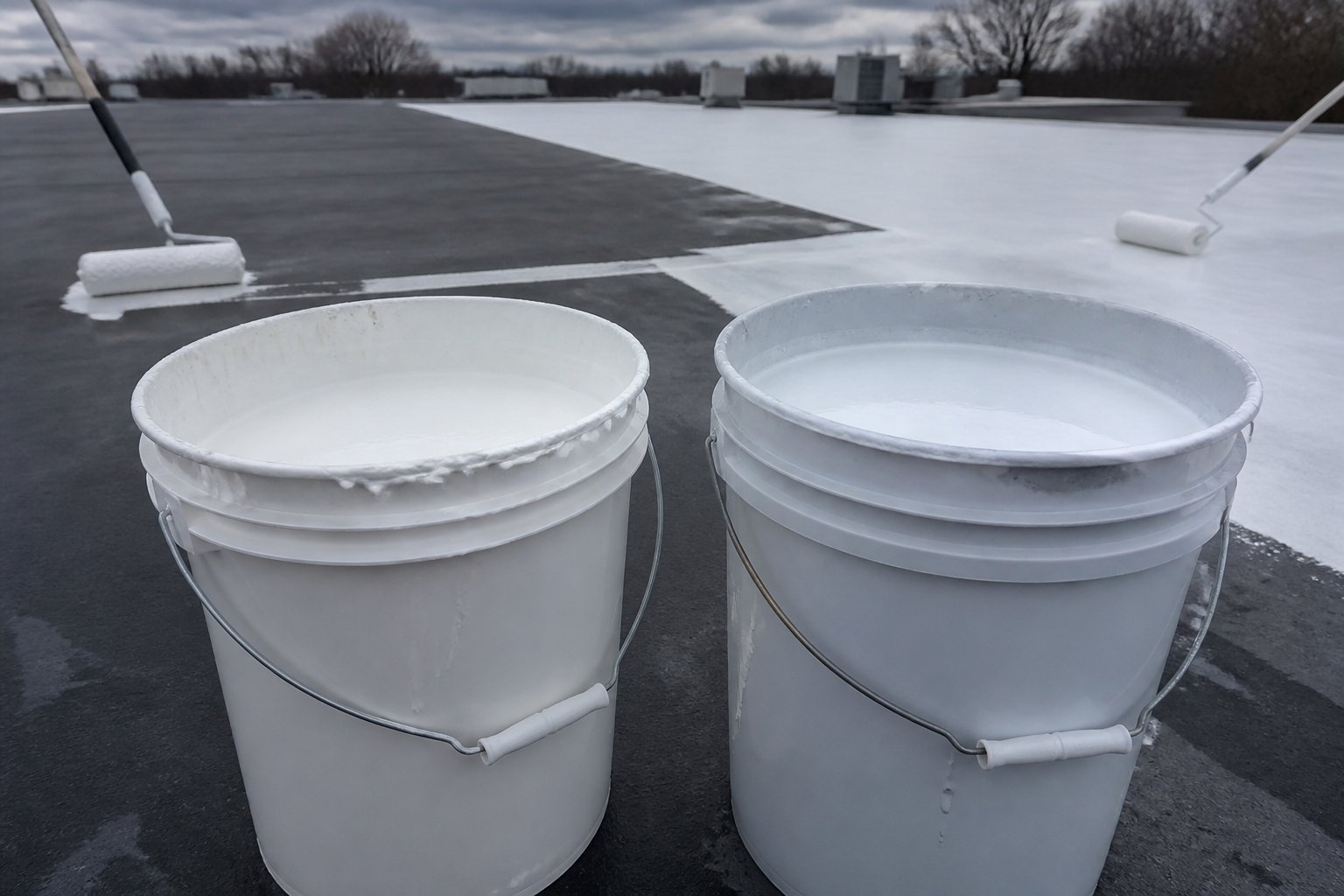
Choosing a roof coating sounds straightforward until you start comparing options. Silicone and acrylic both protect flat roofs. Both extend roof life at a fraction of replacement cost. Both are applied over existing membranes without tearing anything off. But they perform differently under the conditions Michigan actually delivers, and choosing the wrong one for your specific situation costs more in the long run than the price difference between them suggests. Here is a detailed guide on silicon vs acrylic roof coating Michigan.
Why Roof Coatings Make Sense for Michigan Flat Roofs?
A quality flat roof coating that Michigan building owners apply before significant damage sets in is one of the most cost-effective roofing decisions available. It adds 10 to 15 years of functional life to a roof that qualifies, seals surface vulnerabilities before they become structural ones, and costs significantly less than full replacement.
The coating sits on top of the existing membrane and forms a continuous protective layer across the entire surface. Seams, minor cracks, and surface wear get sealed in a single application. The roof does not come off. The building stays occupied. Work is completed in days rather than weeks.
That value proposition holds for both silicone and acrylic. Where they diverge is in how they handle specific conditions.
Things You Need to Know About Silicone Roof Coatings
Silicone is the stronger performer in wet climates and on roofs that experience regular ponding water. That combination makes it relevant for a significant number of Michigan flat roofs.
How It Handles Michigan Conditions
Silicone does not absorb water. It sheds it. A silicone-coated roof can sit under standing water for extended periods without the coating breaking down, softening, or losing adhesion. For flat roofs with drainage imperfections - low spots that hold water for 48 hours or more after a rain event - silicone handles that reality better than any other coating type.
Silicone roof coating West Michigan installations also performs well through the freeze-thaw cycle. Silicone stays flexible across a wide temperature range. It moves with the roof membrane as temperatures swing rather than becoming brittle and cracking under cold stress. That flexibility directly addresses one of the most damaging forces Michigan winters apply to flat roof surfaces.
Silicone also reflects UV effectively, reducing heat absorption during Michigan summers and helping stabilize interior temperatures through seasonal extremes.
Where Silicone Falls Short?
Silicone has a surface that does not harden the way acrylic does. It stays slightly tacky, which means dirt and debris stick to it over time. That surface accumulation reduces reflectivity gradually and requires periodic cleaning to maintain performance. It is not a serious limitation, but it is a real maintenance consideration.
Silicone is also more difficult to recoat down the road. New silicone bonds well to existing silicone, but applying a different coating type over a silicone surface requires additional preparation. If you apply silicone now, plan to maintain it with silicone going forward.
The application requires dry conditions and temperatures above 40 degrees Fahrenheit. In Michigan, that limits the viable application window more than it would in warmer states. Timing a roof coating application Michigan project, correctly, is also important (late spring to early fall ).
Things You Need to Know About Acrylic Roof Coatings
Acrylic coatings are water-based, widely available, and perform well under the right conditions. For Michigan flat roofs in the right situation, acrylic is a legitimate and cost-effective option.
How It Handles Michigan Conditions
Acrylic performs best on roofs with good drainage where water does not pond for extended periods. It reflects UV strongly - often better than silicone in terms of initial reflectivity - and provides solid protection against surface wear, minor cracking, and weathering on a well-drained roof surface.
The material hardens as it cures, which gives it better resistance to foot traffic than silicone. On roofs that are accessed regularly for HVAC maintenance or equipment service, durability matters. Acrylic also accepts recoating well and is compatible with a wider range of coating types if future maintenance requires a different product.
Cost is another factor. Acrylic coatings generally run less per square foot than silicone. On a large commercial roof where budget is a constraint and drainage is adequate, the cost difference across thousands of square feet adds up meaningfully.
Where Acrylic Falls Short
Ponding water is acrylic's significant weakness. Acrylic absorbs moisture. A roof with low spots that hold standing water will see acrylic coating performance degrade faster than expected - the coating softens, loses adhesion at the affected areas, and eventually fails at exactly the spots that needed protection most.
Cold weather application is also more restricted for acrylic than for silicone. Acrylic needs temperatures above 50 degrees Fahrenheit and cannot be applied if rain is expected within 24 hours of application. In Michigan, that further compresses the reliable application season.
Silicone vs Acrylic Roof Coating Michigan: Differences
The decision between silicone and acrylic for a flat roof coating MI project comes down to three questions.
Does the roof have ponding water issues?
If yes, silicone. Acrylic will not hold up under repeated exposure to standing water, regardless of how well it is applied.
What is the roof used for, and how often is it accessed?
Regular foot traffic favors acrylic's harder surface. A roof that is rarely walked on favors silicone's flexibility and water resistance.
What is the budget, and what are the long-term maintenance plans?
Acrylic costs less upfront and offers more flexibility for future recoating. Silicone costs more initially but outperforms in wet conditions and lasts longer between maintenance cycles on the right roof.
For most roof coating application Michigan projects on flat roofs with any history of ponding or drainage imperfection, silicone is the stronger recommendation.
Besides, silicone roof coating West Michigan applications specifically require attention to surface moisture. Silicone applied over a damp surface loses adhesion at those points and fails early. A professional contractor checks moisture content before application and waits for the right conditions rather than rushing the job.
The Bottom Line
Silicone outperforms acrylic on most Michigan flat roofs because Michigan's conditions align with silicone's strengths. It stays flexible through cold, sheds water rather than absorbing it, and holds up through the conditions this state delivers consistently.
Acrylic earns its place on well-drained roofs where foot traffic is regular, the budget is a primary constraint, and ponding water is not a recurring issue. In the right situation, it is a solid choice. In the wrong one, it underperforms quickly. Before selecting, understand silicon vs acrylic roof coating Michigan properly.
Know your roof, know your drainage situation, and then choose accordingly. Both products work. Only one of them works for every Michigan roof.
Published by Flat Roof Waterproofing Solutions -- certified industrial roofers serving commercial properties across West Michigan. Based in Grand Haven, MI. Call (616) 947-7652 to schedule a free inspection.