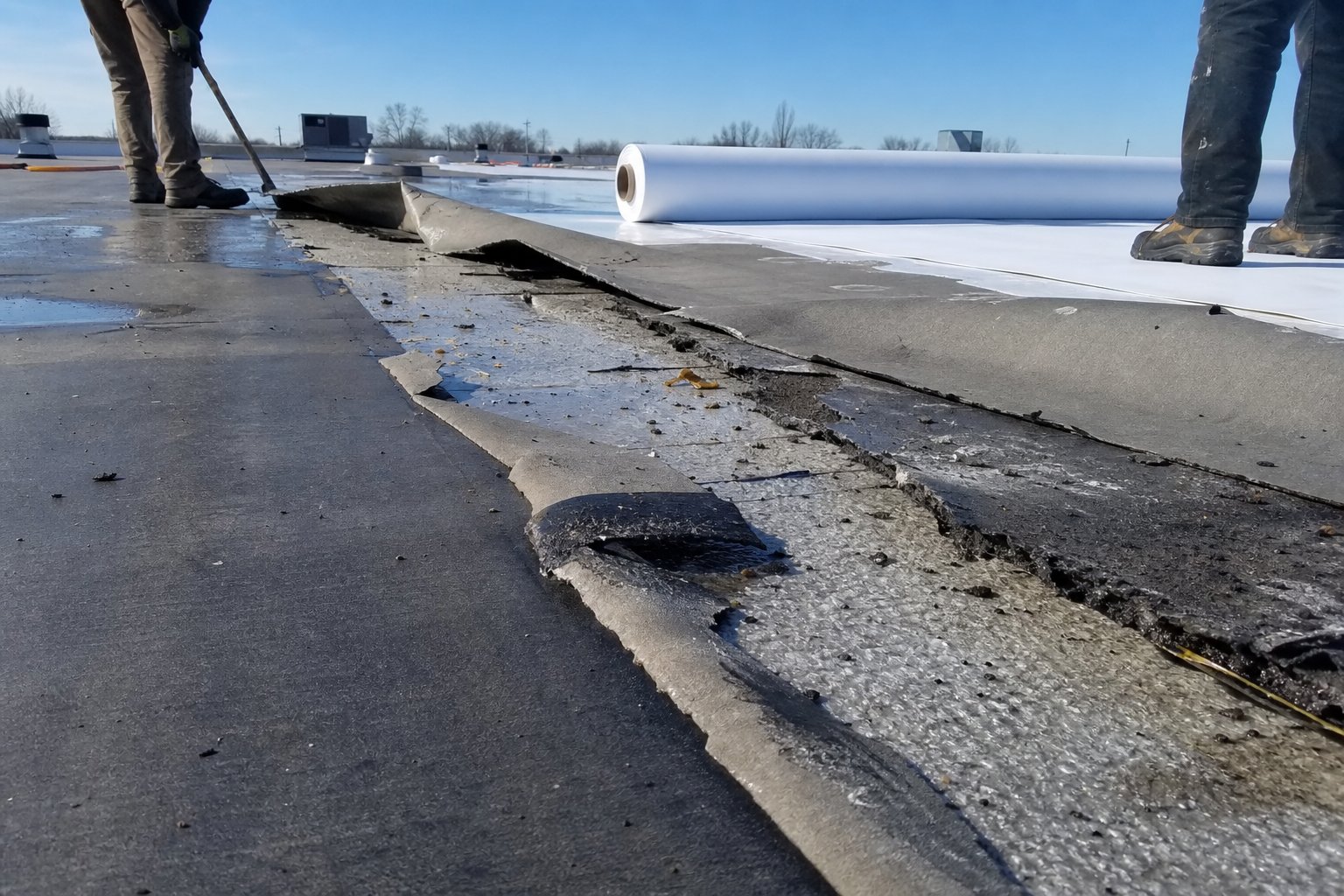
How Do You Replace a Flat Roof in Michigan?
Flat roof replacement is not a weekend project. It is not something you patch together and hope holds through winter. Michigan winters are hard on every roof, but flat roofs take the worst of it. Snow sits on them. Ice forms, melts, and refreezes. Water finds every weak point in the membrane and works its way in slowly until the damage shows up on a tenant's ceiling tile. Here's how to replace a flat roof in Michigan.
Why Michigan Flat Roofs Need Special Attention?
Most roofing information online is written for moderate climates. Michigan is not a moderate climate.
The freeze-thaw cycles here are relentless. Water gets under seams and into small gaps, freezes overnight, expands, and forces materials apart. Do that dozens of times over a single winter, and a roof that looked fine in October starts failing by March. Heavy snow loads add structural stress that roofs in warmer states never have to handle.
This is why flat roof replacement in Michigan involves specific materials, specific installation requirements, and specific building codes that do not apply everywhere else.
How Do You Replace a Flat Roof in Michigan?
Step 1: Planning and Permits
Before any material gets touched, permits need to be in order.
Michigan requires a building permit for a full roof replacement in most municipalities, and commercial projects fall under the Michigan Building Code and the Michigan Energy Code. This is not optional, and skipping it creates problems when you sell the building, refinance, or file an insurance claim.
Michigan building codes also limit roofs to a maximum of two layers of roofing material. If your existing flat roof already has two layers on it, a full tear-off is mandatory before anything new goes on. Adding a third layer creates excessive weight that the structure is not designed to carry, and no reputable contractor will do it.
You will typically need to submit documentation showing the size of the roof, the materials being used, and basic project details. Your contractor handles most of this in practice, but it is worth knowing upfront that the permit process is part of the timeline.
Step 2: Choosing the Right Material
Material selection matters more for flat roofs in Michigan than almost anywhere else. The wrong choice for the climate leads to premature failure.
- TPO (Thermoplastic Polyolefin) is the most popular modern choice for Michigan flat roofs. The white reflective surface helps with summer energy costs, and the heat-welded seams hold up significantly better than adhesive seams in cold weather.
- EPDM (Rubber Roofing) is another strong option. It is extremely durable, flexible in cold temperatures, and can last 40 years or more with proper maintenance. The one limitation is installation temperature. EPDM needs to go on when temperatures are above 50 degrees Fahrenheit. Trying to install it in cold conditions compromises adhesion and membrane performance.
- PVC (Duro-Last) is worth mentioning specifically because it is manufactured in Michigan and designed for flat and low slope applications in this climate. It is known for being genuinely leak-proof when installed correctly and performs well through freeze-thaw conditions.
- Modified Bitumen is still specified on some smaller commercial flat roofs and additions. It comes in rolls with heat-fused or adhesive seams and is more straightforward to install than single-ply membranes on simple roof shapes, though it costs more to maintain over time.
Step 3: Tear Off
The first physical step is stripping everything down to the structural deck.
All existing roofing material comes off. Insulation, old membrane, base sheets, everything. This is non-negotiable for a proper replacement. Roofing over an existing flat roof without inspecting the deck underneath is one of the most common shortcuts that leads to early failure.
Step 4: Deck Inspection
Once the tear-off is complete, the wood deck is inspected carefully.
Any plywood or OSB that shows rot, water saturation, or structural damage gets replaced before anything else happens. In Michigan, where moisture infiltration is common over a roof's lifespan, finding damaged decking is expected rather than surprising. Replacing it adds to the cost, but skipping it means installing a new roof over a foundation that will fail.
Step 5: Tapered Insulation
This step is critical in Michigan and often skipped on cheaper projects.
Flat roofs are not actually completely flat. They need a slight slope to move water toward drains rather than letting it pool on the surface. Standing water on a flat roof is one of the primary causes of membrane failure and structural damage from ice weight during winter.
Tapered insulation creates that slope by using insulation boards of varying thickness across the roof surface. The result is a surface that looks flat from the ground but directs water exactly where it needs to go.
Step 6: Base Sheet and Coverboard
This is a high-density insulation board or a self-adhesive base sheet. It creates a smooth, clean surface for the membrane. It also adds a layer of protection.
Step 7: Membrane Installation
The chosen membrane material gets rolled out across the prepared surface. It is secured using mechanical fasteners, adhesive, or heat-welded seams. For TPO in Michigan, heat-welded seams are the professional standard. They create a bond that is stronger than the membrane itself.
Step 8: Flashing and Sealing
Every penetration point on a flat roof is a potential leak. Vent pipes, skylights, HVAC curbs, parapet walls, and perimeter edges all require specialized flashing and sealing.
This is where a lot of DIY and budget installations fail. The membrane in the field of the roof holds up fine. The leak shows up three years later at a flashing detail that was not done properly. Correct flashing installation takes time and attention and is one of the clearest differences between a professional job and a poor one.
Spring Flat Roof Replacement in Michigan
April through early June is the best window for flat roof replacement in Michigan. Temperatures during this period typically sit between 40 and 70 degrees Fahrenheit, which is the ideal range for adhesives and membranes to bond and cure correctly.
Winter installation is problematic because cold makes membrane materials brittle and compromises adhesive performance. Summer heat creates the opposite problem, making materials too pliable during installation and driving contractor schedules to their limit.
Spring also serves as the natural recovery window after winter damage. Getting a professional inspection done in late March or early April, after the final hard freeze but before heavy spring rains arrive, reveals any hidden damage from the winter while leaving enough time to schedule replacement before conditions deteriorate.
Commercial Flat Roof Installation in Michigan
Commercial flat roof installation follows the same basic process. But there are some extra requirements.
The Michigan Building Code and the Commercial Michigan Energy Code both apply to commercial projects. Insulation must meet minimum R-value requirements, which typically means using rigid polyiso insulation above the deck. Drainage requirements are stricter for commercial buildings.
Single-ply membranes like TPO and EPDM run $5 to $12 per square foot for a full-warranted installation. Metal roofing for commercial applications runs $7 to $20 or more per square foot but carries a lifespan of 40 to 70 years.
Final Thought
Replacing a flat roof in Michigan is a significant investment. Done correctly with the right materials and proper installation, it protects the building for 30 to 40 years or more.
Done incorrectly, it leaks within a few years, and the problems compound quickly in a climate where water and ice find every weakness.
Start with a professional inspection in early spring. Understand what the tear-off reveals about your deck condition. Choose materials suited to Michigan's freeze-thaw reality.
Published by Flat Roof Waterproofing Solutions -- certified industrial roofers serving commercial properties across West Michigan. Based in Grand Haven, MI. Call (616) 947-7652 to schedule a free inspection.